 Skip to content

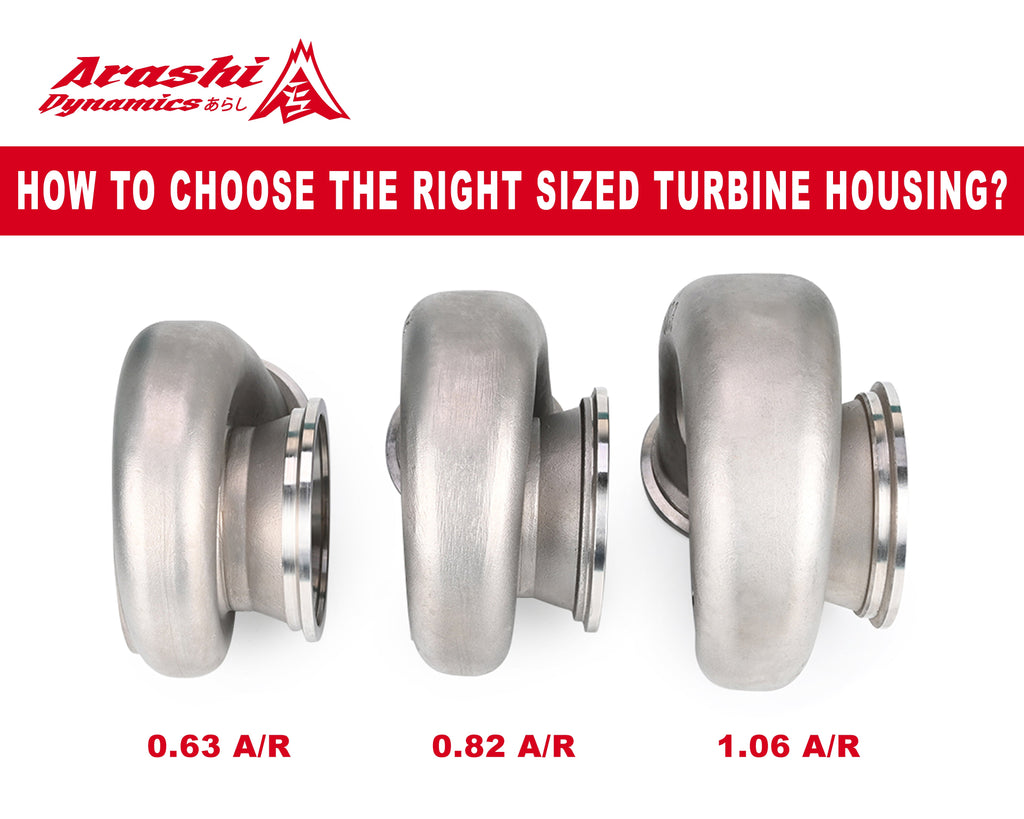

How to choose the right sized turbine housing?
hen selecting a turbine housing for your turbocharger system, choosing the largest option in pursuit of maximum horsepower is rarely the best approach. Optimal performance depends on aligning the housing size with your specific power goals and driving purpose. A turbo setup designed for daily commuting requires very different characteristics than one built for aggressive street or track use. Understanding these differences is essential to achieving the right balance between responsiveness, efficiency, and peak output.

Turbocharger Basics: Understanding the Turbine Housing
Before examining how to select the correct turbine housing, it is important to review the fundamental structure and function of a turbocharger. A typical turbocharger consists of two primary sections: the compressor side (cold side) and the turbine side (hot side). The turbine housing is located on the exhaust side of the system and is directly exposed to high-temperature exhaust gases produced by the engine.

During operation, exhaust gases flow from the exhaust manifold into the turbine housing inlet and are directed through precisely engineered passages. These passages accelerate and guide the exhaust flow toward the turbine wheel, converting thermal and kinetic energy into rotational energy. As the turbine wheel spins, it drives the compressor wheel via a common shaft, enabling pressurized intake air to be delivered to the engine.
Because the turbine housing operates in an extreme thermal environment—often exceeding 900°C under high-load conditions—it must be manufactured from heat-resistant materials capable of withstanding prolonged exposure to elevated temperatures and thermal cycling. Most turbine housings are produced using high-nickel cast iron alloys, frequently incorporating a controlled percentage of Inconel. These materials improve resistance to heat fatigue, oxidation, and cracking.
The exact alloy composition and Inconel content may vary depending on factors such as engine bay temperature, exhaust gas energy, turbo placement, and intended application. High-performance or tightly packaged engine compartments typically require higher-grade materials to ensure long-term reliability.
A/R Ratio and Flow Characteristics
One of the most critical parameters when selecting a turbine housing is the A/R ratio, which directly influences exhaust gas velocity, turbocharger response, and overall engine performance. The term A/R represents the ratio between the cross-sectional area (A) of the turbine inlet passage and the distance (R) from the center of that area to the turbine wheel’s axis of rotation.
A smaller A/R ratio features a narrower exhaust passage and shorter flow radius. This design accelerates exhaust gases more rapidly, increasing their velocity before they reach the turbine wheel. As a result, the turbocharger spools more quickly, producing boost at lower engine speeds. This characteristic is highly desirable for daily-driven vehicles and street-oriented setups, where low-end torque, throttle response, and drivability are priorities.

However, smaller A/R housings also impose greater flow restrictions at high engine speeds. As exhaust volume increases with rising RPM, the limited passage area can become a bottleneck, leading to elevated exhaust backpressure. Excessive backpressure reduces volumetric efficiency, increases exhaust gas temperatures, and can limit peak horsepower potential.
In contrast, a larger A/R ratio provides a wider flow path and longer radius. This configuration allows a greater volume of exhaust gases to pass through the turbine housing with less restriction, reducing backpressure at high engine speeds. Larger A/R housings are therefore better suited for high-horsepower, track-focused, or top-end-oriented builds where sustained high-RPM operation is expected.
The trade-off is reduced exhaust gas velocity at lower engine speeds. With less concentrated flow energy, larger housings typically require higher RPM and greater exhaust mass flow to achieve effective turbine acceleration. This results in slower spool characteristics and increased turbo lag in low-speed driving conditions.
Ultimately, the ideal A/R ratio represents a balance between low-speed responsiveness and high-speed flow capacity. Selecting the correct housing requires careful consideration of engine displacement, airflow demand, operating RPM range, camshaft profile, exhaust manifold design, and intended driving application.
Find out more :

